
Salt Lick Block Production Line | Hydraulic Pressing & Packing
The equipment is configured according to your target block weight and shape, formulation, production scale, and plant conditions. The solution is suitable for salt block manufacturers, salt processors, mineral supplement producers, and feed manufacturers adding lick blocks to their product range.
Solution Overview
View Solution
| Item | Solution Overview |
|---|---|
| Finished Products | Hydraulically pressed salt blocks and mineral lick blocks |
| For ming Method | Hydraulic pressing with forming molds |
| Process Flow | Mixing → Feeding & Mold Filling → Pressing → Demolding → Conveying → Packing |
| Main Equipment | Mixer, feeding and screw conveying equipment, hydraulic press, molds, block conveyors, and packing equipment |
| Block Design | Molds configured for the target block weight, shape, hole design, and branding |
| Project Types | New production lines, plant expansions, and additional equipment for existing facilities |
| Supply & Support | Equipment configuration and supply, with installation and commissioning support as agreed for each project |
Salt Lick Block Production Line
BellaEx provides salt and mineral lick block production line solutions built around hydraulic pressing, covering material mixing, feeding, block forming, conveying, and packing.
Whether you are building a new plant or expanding an existing facility, BellaEx can help develop an equipment configuration and supply plan for your project.
Solution Overview
A salt lick block production line mixes salt and mineral ingredients, feeds the material into molds, and forms it into blocks through hydraulic pressing. The formed blocks are then transferred for downstream handling and packing.
| Item | Solution Overview |
|---|---|
| Finished Products | Hydraulically pressed salt blocks and mineral lick blocks |
| For ming Method | Hydraulic pressing with forming molds |
| Process Flow | Mixing → Feeding & Mold Filling → Pressing → Demolding → Conveying → Packing |
| Main Equipment | Mixer, feeding and screw conveying equipment, hydraulic press, molds, block conveyors, and packing equipment |
| Block Design | Molds configured for the target block weight, shape, hole design, and branding |
| Project Types | New production lines, plant expansions, and additional equipment for existing facilities |
| Supply & Support | Equipment configuration and supply, with installation and commissioning support as agreed for each project |
01 | Products and Raw Materials
Products & Materials
Salt Blocks and Mineral Lick Blocks
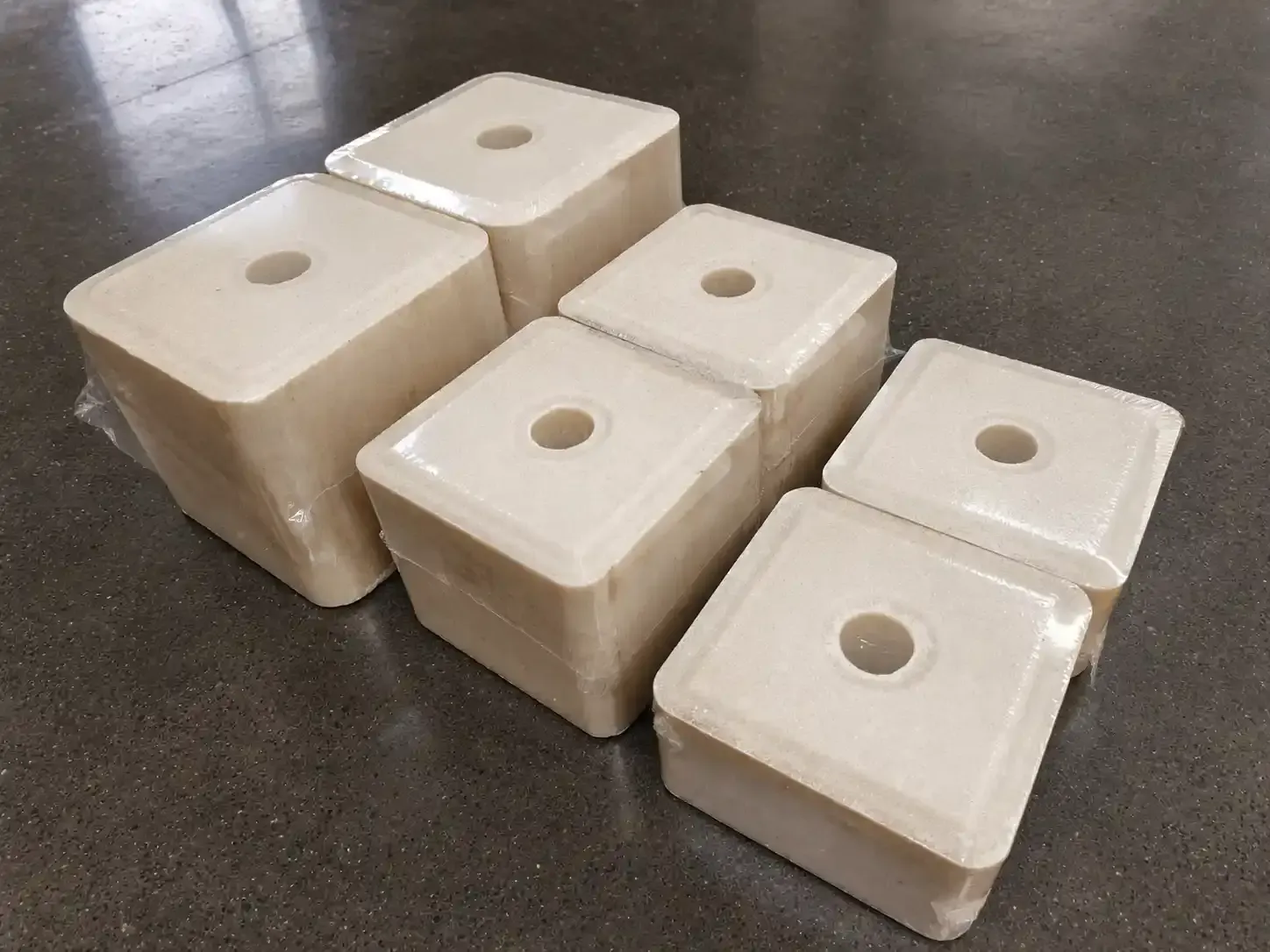
Salt blocks are solid supplements made primarily from salt. Mineral lick blocks may also contain major minerals and trace minerals, depending on the intended product and formulation.
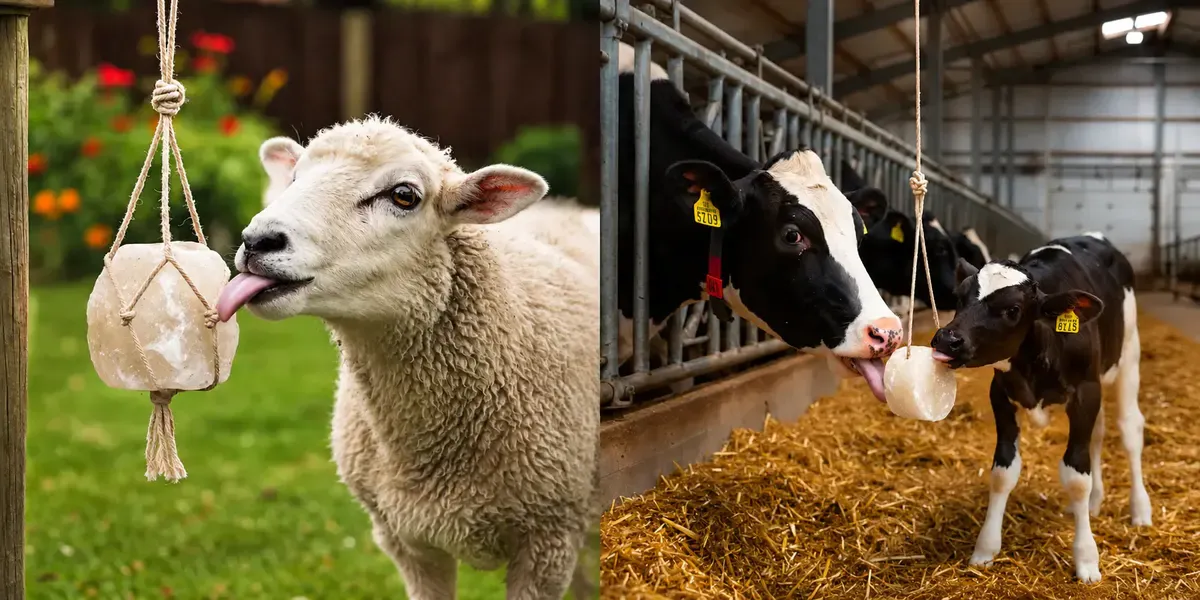
These products are used for salt and mineral supplementation in cattle, sheep, and other livestock. They can be produced in different weights, shapes, and packaging formats for farm supply, private-label products, and commercial distribution.
BellaEx's hydraulic pressing solution is primarily intended for salt and mineral-based materials that can be formed into blocks by hydraulic pressing.
Raw Materials and Forming Requirements
Particle size, moisture content, flowability, and formulation affect how the material behaves during mixing, feeding, and pressing.
Even blocks of the same target weight may require different filling or pressing conditions when the formulations differ. An existing formulation or product sample provides a useful starting point for evaluating the forming process and equipment configuration.
The market also includes nutritional lick blocks made with ingredients such as molasses and urea. These products may require different mixing, forming, or curing processes and should be evaluated separately from conventional hydraulically pressed salt blocks.
Products for Different Livestock
Blocks intended for cattle, sheep, and other livestock may look similar, but their formulations need to be developed for the intended animals.
Mineral and trace-element requirements vary by species. Copper levels, in particular, need careful consideration in products intended for sheep.
Manufacturers planning several livestock product ranges should also consider formula management, production changeovers, and clear identification of the finished products.
02 | Block Sizes, Molds & Custom Branding
Molds & Branding
Introduction
Block weight, dimensions, shape, and hole design are the starting points for mold design. For commercially distributed products, branding and packaging can be planned at the same stage.
Block Weight and Shape
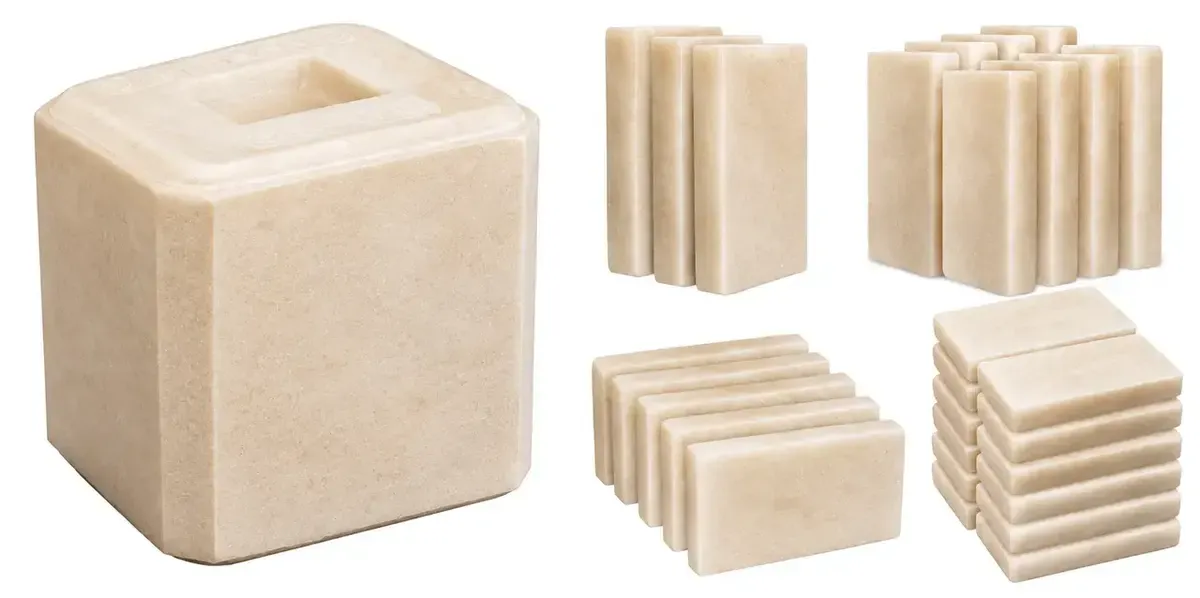
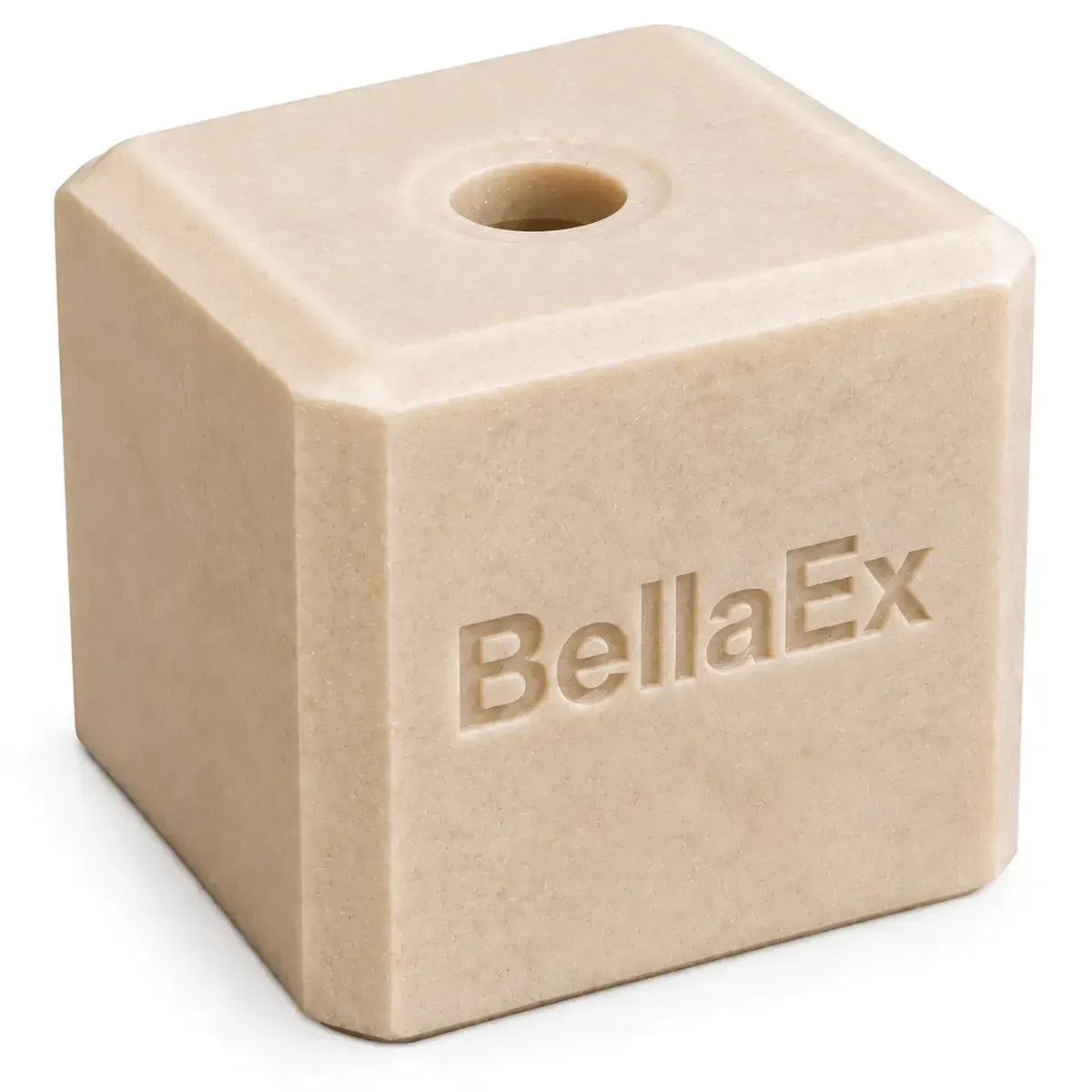
Salt lick blocks can be made in different weights and shapes for the intended market, including designs with a central hole.
The mold defines the block's outer profile, hole position, and embossed features. Different block sizes may use different molds and cavity arrangements, depending on the product specifications and press configuration.
Where several sizes will be produced on one line, the expected volume of each size and the mold changeover arrangements also need to be considered.
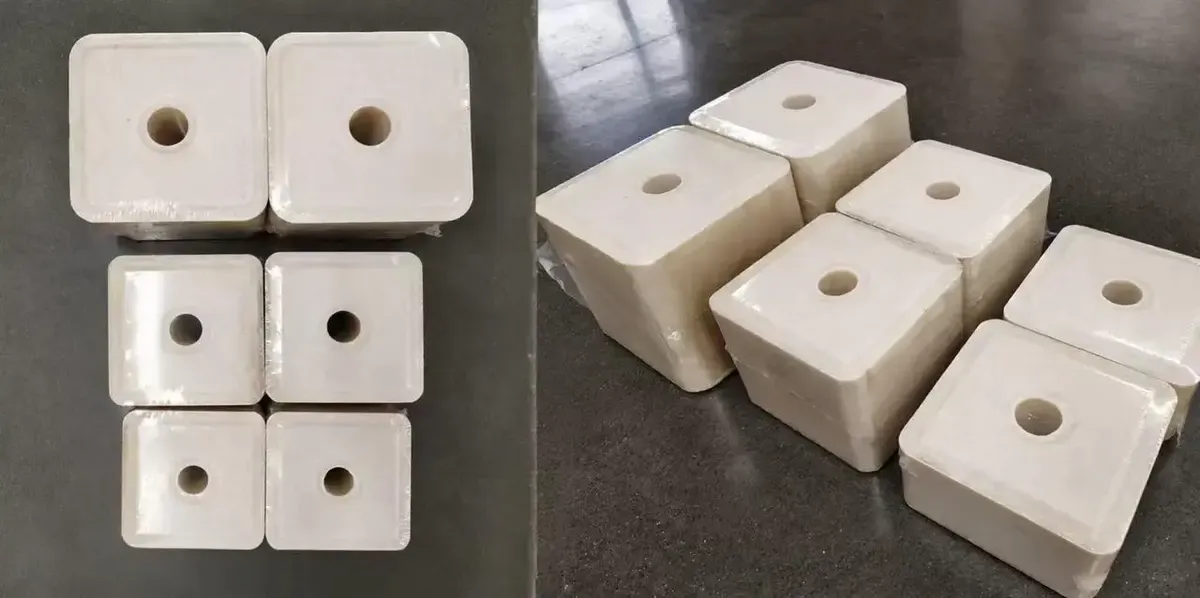
A BellaEx project in Morocco included contracted mold arrangements for three block weights. The details are included in the project reference below.
Logo Embossing
Logo embossing can be considered as part of custom mold design for private-label products.
The artwork, embossing position, dimensions, and depth are reviewed against the mold design and forming requirements. Fine lines or complex details may need adjustment to produce a suitable impression on the block surface.
The logo, central hole, and overall block shape can be considered together when developing the mold.
Finished-Block Packaging
Depending on the intended market, blocks may be handled without individual wrapping or supplied in film packaging.
BellaEx can configure film sealing and heat-shrink packing equipment for a project. The packing method is selected to suit block dimensions, weight, and distribution requirements.
Deciding on the packaging format early also helps determine the downstream conveying and packing equipment.
03 | Salt Lick Block Production Process
How It Works
View Process
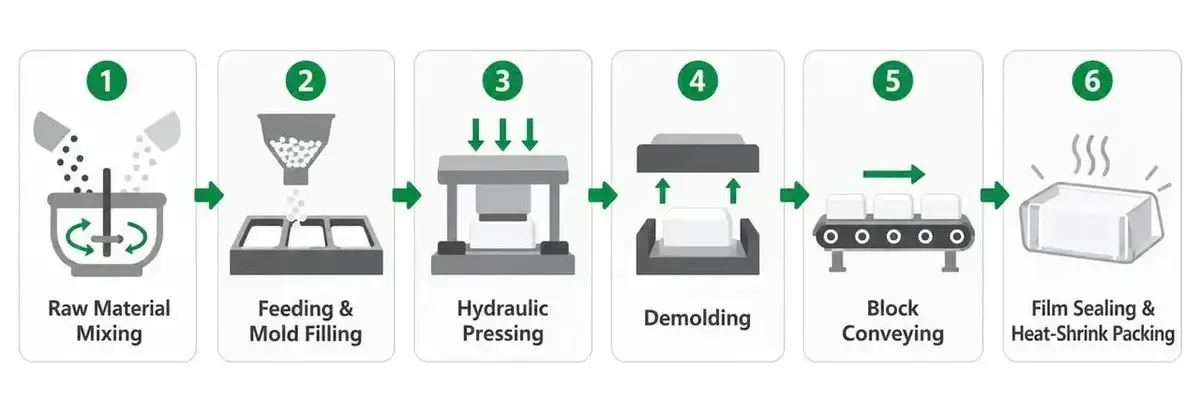
The line follows the material from mixing and mold filling through pressing, demolding, conveying, and packing.
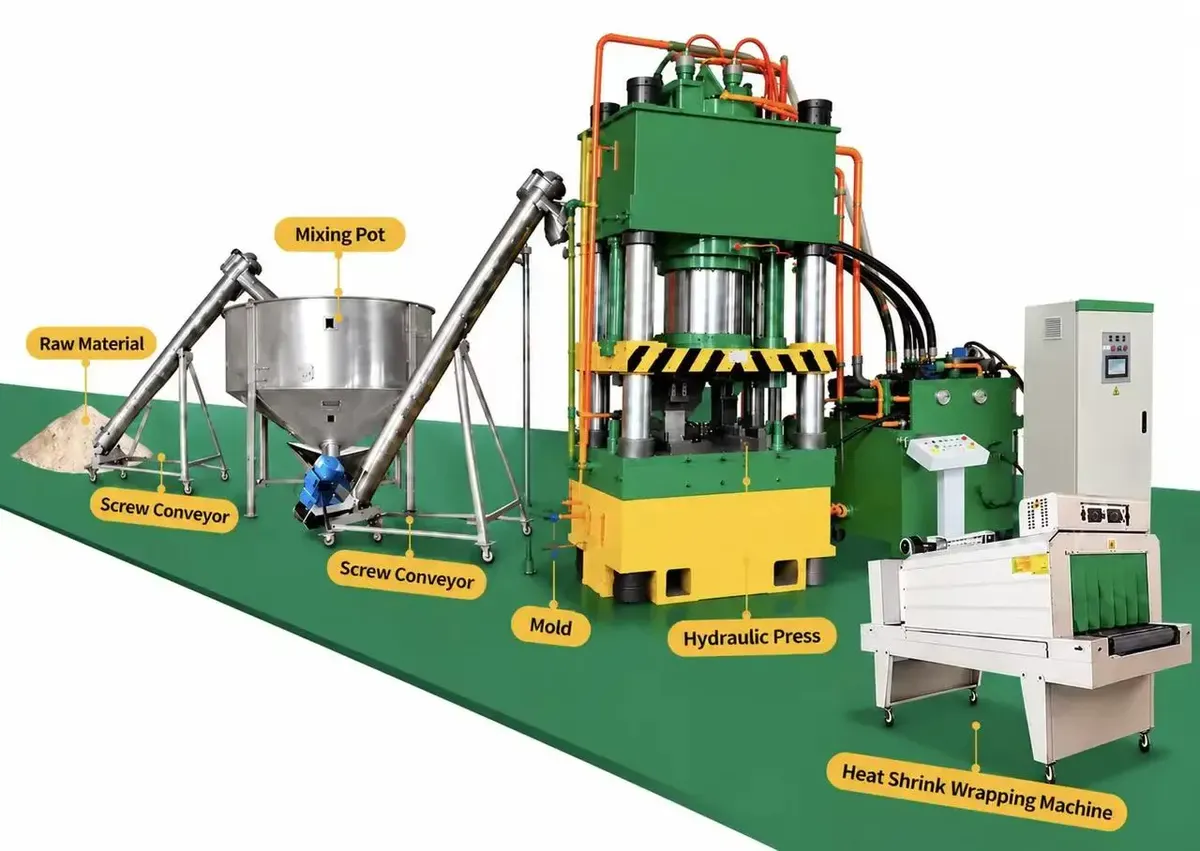
Raw Material Mixing → Feeding & Mold Filling → Hydraulic Pressing → Demolding → Block Conveying → Film Sealing & Heat-Shrink Packing
Raw Material Mixing
Salt, mineral powders, and other ingredients are prepared according to the product formulation before entering the mixer. The mixer blends the ingredients before they move to the forming stage.
For plants producing multiple formulations, ingredient handling and changeovers form part of the production plan.
Feeding and Mold Filling
Feeding equipment and screw conveyors transfer the mixed material to the pressing area. The material is then fed into the molds, ready for pressing.
This stage connects the mixer discharge to the press's filling system.
Hydraulic Pressing
Once the mold is filled, the hydraulic press compacts the material into a block.
The mold defines the outer profile and hole design, while the pressing conditions influence how the material forms and holds together.
Demolding and Block Transfer
After pressing, the formed blocks are released from the mold and transferred toward the packing area.
The demolding mechanism releases the blocks, while the conveying equipment supports and carries them between the press and the next stage.
Film Sealing and Heat-Shrink Packing
On lines equipped for shrink-film packing, blocks are wrapped and sealed in film before passing through the heat-shrink stage.
Packing equipment and settings are matched to the block dimensions and film material. Packed blocks then move on to storage or shipment preparation.
04 | Main Equipment and Configuration
View Equipment
View Equipment
Each equipment unit has a specific job. Selecting a line means matching those units to the product and to one another, including any machinery already installed at the plant.
| Equipment /System | Main Selection and Configuration Considerations |
|---|---|
| Mixing Equipment | Raw material type, batch requirements, material condition, and discharge arrangement |
| Feeding & Screw Conveying | Material properties, conveying route, mixer discharge, and press inlet position |
| Hydraulic Press | Block specifications, mold design, material suitability, and target production scale |
| Forming Molds | Target block weight, shape, hole design, cavity count, and logo embossing requirements |
| Block Conveyors | Block weight and dimensions, support surfaces, and connection to packing equipment |
| Film Sealing & Shrink Packing | Block shape, packaging film, and intended packing format |
| Electrical & Control Units | Equipment combination, operating method, and required automation scope |
Matching the Press and Molds
The hydraulic press is the main forming machine, but press tonnage alone does not determine the right setup.
Selection starts with the intended block and material: target weight, dimensions, formulation, and forming requirements. The press and mold arrangement are then considered together, including cavity count and the production plan for each size.
For a multi-size line, the assessment also includes the mold combination and changeover arrangements rather than treating each block size as a separate machine purchase.
Connecting Upstream and Downstream Equipment
For a new line, the mixer discharge, press inlet and outlet, and packing infeed can be planned together.
For an existing plant, the starting points are the positions and connection details of the installed equipment. These determine the available routes for feeding, block transfer, and packing.
The packing section must also accommodate the intended block dimensions and transfer method.
Controls and Automation
The press, feeding equipment, and packing machines can be fitted with control units according to the project requirements.
The operating method and coordination required between machines define the control scope. For a new line, this is reviewed alongside equipment selection; for an existing plant, the connections between new and installed systems must also be assessed.
05 | Capacity Planning and Plant Layout
Plant Layout
How to Set Your Production Target
Capacity planning starts with the finished products you intend to make. The aim is to match the press, molds, feeding, and packing to the required output, rather than select a press by tonnage alone.
State both the required block count and the output by weight. Blocks per hour helps define finished-unit and packing requirements; tonnes per hour or per day helps establish raw material demand and production scale.
The following information connects your production target to equipment selection:
For a multi-size line, set a target for each size rather than applying one hourly figure to every product. Mold arrangement and pressing conditions need to be considered alongside the time available for production and the capacity of the other stages.
If you are still defining your output target, BellaEx can review your production plans and discuss a preliminary configuration. The final capacity assessment is based on the selected equipment, actual materials, and operating conditions.
| Production Input | Equipment or Planning Decision |
|---|---|
| Block weight, dimensions, and formulation | Establish the mold requirements and assess the forming conditions for the intended material |
| Target blocks per hour | Assess mold arrangement and pressing cycle requirements, then check feeding, block transfer, and packing capacity |
| Available operating hours | Plan daily production while allowing for replenishment, changeovers, and planned stops |
| Product sizes and volume of each | Plan the mold combination and production schedule, including changes between sizes |
| Packaging format | Select downstream handling and packing equipment for the intended block sizes and output |
New Plants and Existing Plant Expansions
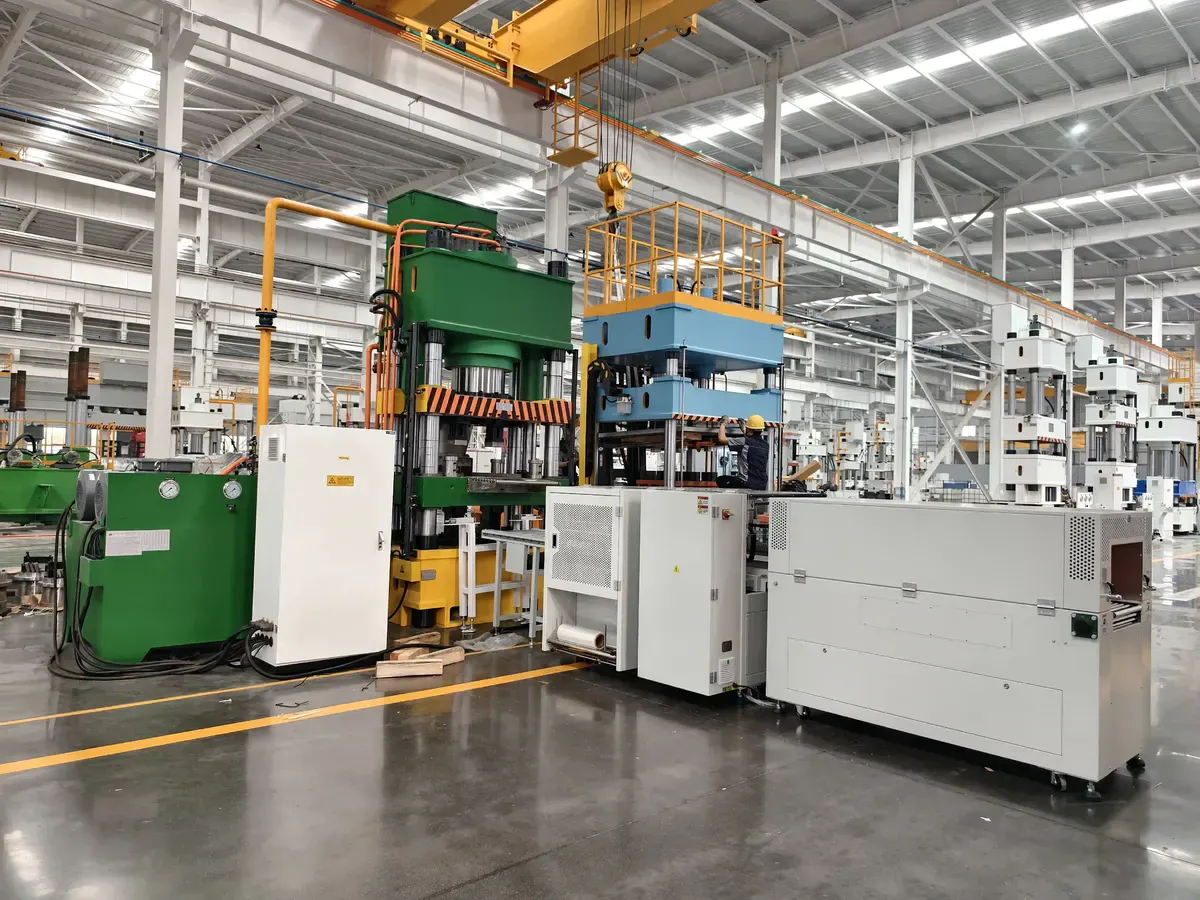
For a new line, we can plan equipment areas around the flow of materials through mixing, pressing, packing, and finished-block handling.
For an expansion project, the layout also needs to account for installed equipment, existing material routes, packing space, and the area available for additional machines.
Machine dimensions are only part of the layout. Space is also needed for operation, maintenance, material handling, and equipment installation.
Where the building has multiple levels, platforms, columns, doorways, or restricted access, the engineering team can assess these constraints and take them into account when preparing the layout proposal.
06 | BellaEx Supply Scope and Project Support
Supply Scope
Introduction
BellaEx can arrange equipment configuration and supply for salt lick block projects, from complete production lines to selected equipment for existing plants.
Complete Production Line Supply
For a new line, BellaEx can bring material handling, hydraulic forming, molds, block conveying, and packing into one equipment supply package.
The equipment list is based on the intended products, production scale, and plant conditions. Electrical and control equipment is included according to the agreed configuration.
Equipment for Existing Plants
Existing equipment lists, layout drawings, and interface details provide the starting point for a partial supply.
For example, a plant with a mixer may need forming and downstream equipment. A project with an existing press may instead need block transfer or packing machinery. Each arrangement is assessed against the existing process and connection requirements.
Layout Coordination, Installation and Commissioning
BellaEx can work with the customer to review equipment placement, material flow, and connections between process stages. Installation supervision, commissioning support, and related technical assistance can be included as agreed in the project contract.
Equipment supply is only one part of preparing a line for operation. The project scope also needs to define site preparation, connections, delivery arrangements, and responsibility for each item.
The agreed equipment list, service scope, and responsibilities are recorded in the project proposal and contract.
| Scope Item | What the Project Agreement Needs to Define |
|---|---|
| Equipment and molds | The machines, mold arrangements, and associated items included in the quotation |
| Equipment connections | The connecting equipment and interfaces, including responsibility for supply and site connection work |
| Installation and commissioning | The agreed supervision or support services and the site preparations needed for them |
| Building and civil works | Site suitability and any civil works needed for the selected equipment, with responsibilities agreed for the project |
| P ower and other utilities | Electrical supply and any additional utilities required by the selected equipment, including site connections and responsibilities |
| Transport and local arrangements | Delivery terms, freight arrangements, and responsibility for local procedures and charges |
07 | Morocco Salt Lick Block Project
Details
BellaEx salt lick block project
For a practical reference, here's a salt lick block project BellaEx undertook for a customer in Morocco.
The project was planned around three block weights—3 kg, 5 kg, and 10 kg—with equipment covering material handling, hydraulic pressing, and finished-block packing.
Project Configuration
The signed sales contract specified the following equipment and mold arrangements:
In addition to the equipment configuration, the project discussions covered custom logo embossing and the layout of the equipment within the customer's facility.
BellaEx has also published a shipment update for this project, including information about the equipment and export preparations.
| Project Item | Contracted Configuration |
|---|---|
| Hydraulic Forming | 630-ton four-column hydraulic press |
| 3 kg Block Mold | Two blocks per mold |
| 5 kg Block Mold | Two blocks per mold |
| 10 kg Block Mold | One block per mold |
| Material Handling | Mixing, screw conveying, and related feeding equipment |
| Finished-Block Packing | Film sealing and heat-shrink packing equipment |
Frequently Asked Questions
Get Answers
Can I purchase just the hydraulic press or selected equipment?
A press-only or partial equipment supply can be discussed based on your project requirements.
If mixing, conveying, or packing equipment is already installed, we can review the interfaces and assess how the new equipment would fit into your existing process.
Get Answers
Not always.
For low-moisture salt and mineral materials that form suitable blocks under hydraulic pressure, the process may move from demolding to conveying and packing without a separate drying stage.
Formulations that require additional curing, stabilization, or other treatment after pressing need a separate process assessment.
Plan Your Salt Lick Block Production Line
Talk to an Engineer
Plan Your Lin
If you are planning a new salt lick block production line or adding equipment to an existing plant, share your product and project requirements with BellaEx.
The following information will help us understand your plans:
You can also share finished-block photos, samples, preliminary building drawings, or an existing equipment list.
BellaEx can use these details to review the forming, material handling, conveying, and packing requirements, develop the equipment scope, and prepare a project quotation.
Mineral Lick Block Production Process | From Pressing to Packing | Bellaex
| Project Information | What to Share |
|---|---|
| Product Type | Salt blocks or mineral lick blocks, and the intended livestock |
| Block Specifications | Weight, shape, hole design, logo, and other product requirements |
| Raw Materials & Formulation | Main ingredients, particle size, moisture, and any special materials |
| Production Target | Expected output, operating hours, and requirements for multiple block sizes |
| Packing Requirements | Intended packaging format and finished-product requirements |
| Plant Conditions | New or existing facility, available space, power supply, and installed equipment |
Photos
Videos
Contact BellaEx for videos of this equipment or project.