
How Much Corn Flaking Capacity Does Your Dairy Farm Really Need?
Start with Your Actual Daily Steam-Flaked Corn Demand
The first step is to confirm:How much steam-flaked corn does your dairy farm actually need per day?Do not calculate capacity only based on total herd size.In most dairy operations, steam-flaked corn is mainly used for selected cattle groups, such as:
- High-producing lactating cows
- Fresh cows
- Transition cows
- Other groups depending on the ration design
Dry cows, heifers, or replacement animals may use little or none, depending on your nutrition program.A simple calculation is:Daily steam-flaked corn demand = Number of target cattle × Daily usage per headExampleA dairy farm has:
- 1,500 total cows
- 700 lactating cows
- 5 kg steam-flaked corn per lactating cow per day
Calculation:700 × 5 kg = 3,500 kg/daySo the real steam-flaked corn demand is:3.5 tons/dayThe calculation should be based on the cattle groups that actually use steam-flaked corn, not simply the total herd size.This helps avoid oversized equipment investment
Convert Daily Demand into Required Hourly Capacity
- Real production is rarely 100% theoretical.
- In daily operation, it is better to allow some margin for:
- Startup losses
- Shutdown cleaning
- Moisture variation
- Operator adjustments
- Steam fluctuation
- Occasional downtime
- A practical engineering reference is:
- Add 15–30% capacity margin
- Example
- Calculated demand:
- 440 kg/hour
- Recommended practical selection:
- 550–650 kg/hour
- This is usually more practical than selecting a machine exactly at the theoretical demand.
- The purpose of the margin is not to oversize the project blindly, but to improve operational stability.
- Many farms focus first on flaking mill size.
- However, in steam-flaked corn production, the steam system often determines the actual performance.
- Typical steam conditioning may require:
- Steam is used to:
- Raise corn moisture
- Soften kernel structure
- Support starch gelatinization
- Improve flake quality
- If steam supply is insufficient, common problems may include:
- Poor starch gelatinization
- Inconsistent flakes
- Excessive fines
- Unstable density
- Reduced digestibility
- For example, a flaking mill rated for 1 TPH may still fail to achieve stable production if the boiler capacity is undersized.
- So steam supply should be evaluated together with mill selection.
- Steam-flaked corn is not simply “flattened corn.”
- Process quality matters, and one important parameter is flake density.
- Typical Reference Flake Density
- The target depends on:
- Digestibility goals
- Ration formulation
- Animal performance targets
- Nutritionist preference
- Lower density generally means more aggressive processing and better starch availability.
- However, excessive processing may also create too many fines, storage issues, or handling losses.
- A suitable equipment selection should match your target flake specification, not only your hourly capacity.
- Capacity alone is not enough.
- Before confirming the equipment model, the site conditions should also be reviewed.
- Steam System
- Check:
- Existing boiler
- Steam pressure
- Available steam flow
- Steam stability
- Energy Source
- Possible energy sources include:
- Electricity
- Natural gas
- Diesel
- Biomass
- Other local energy options
Workshop Layout
- Check:
- Available installation height
- Equipment footprint
- Maintenance access
- Crane access
- Future expansion space
Material Handling
- Check whether the project needs:
- Bucket elevator
- Screw conveyor
- Chain conveyor
- Pneumatic transfer
- Storage bins
Feeding System Integration
- Confirm whether the flaked corn will go into:
- Direct feeding
- Storage bins
- Bagging
- Feed mill batching
- Some buyers only need the roll flaking equipment.
- Others may need a complete steam-flaked corn production system.
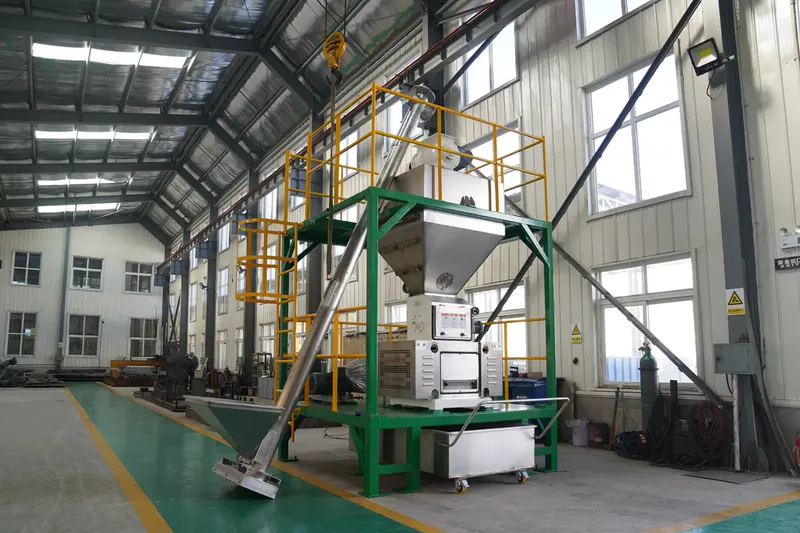
- A complete line may include:
- Corn cleaning
- Destoning
- Moisture addition
- Tempering
- Steam conditioning
- Steam chest / cooker
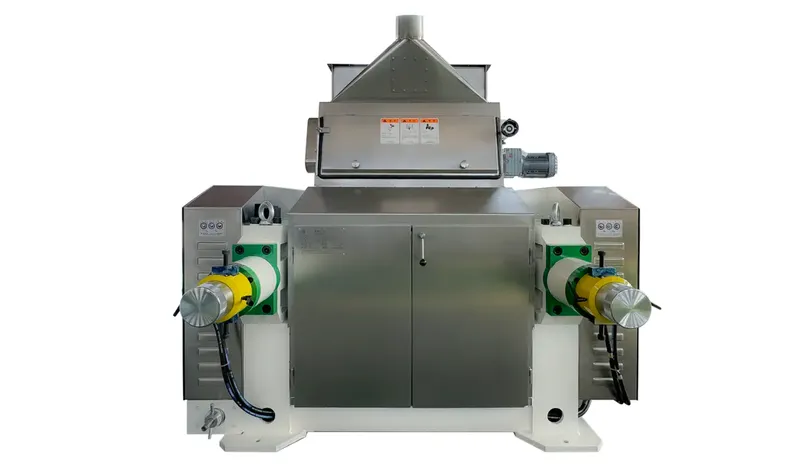
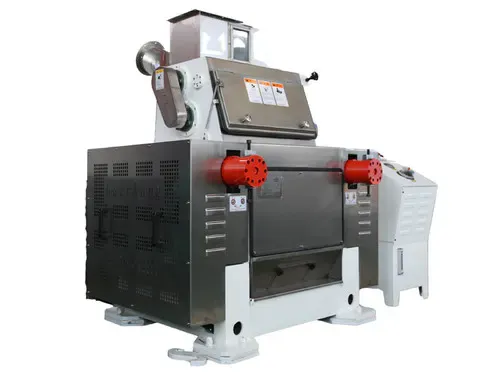
- Flaking mill
- Dryer
- Cooler
- Conveying system
- Storage system
- Control system
- This decision strongly affects project budget, layout, and equipment selection.
- If you already have suitable cleaning, conveying, steam, drying, cooling, and control systems, the project may focus mainly on the flaking mill.
- If these systems are not available, the full process should be evaluated together.
- The following table is for early planning reference only.
- Actual design should be based on ration, working hours, steam condition, and site layout.
- These are only general planning references.
- Actual selection depends on your ration design and operating schedule.
- To get a useful recommendation, prepare the following details:
- Without these details, quotations are often only rough estimates.
- Bellaex focuses on practical grain flaking solutions for feed applications.
- For dairy farm projects, equipment selection is evaluated not only by nominal machine size, but also by:
- Actual feeding demand
- Steam availability
- Target flake quality
- Plant layout
- Conveying integration
- Downstream feeding system compatibility
- If you are planning a dairy steam-flaked corn project, you can share the following information with Bellaex:
- Herd structure
- Daily production target
- Steam condition
- Working schedule
- Site layout
- Existing feeding system
- Future expansion plan
- Based on your real production needs, Bellaex can help you evaluate a more suitable steam-flaked corn solution for your dairy farm.
- Contact Bellaex to discuss your dairy farm corn flaking requirement.